The Future of US Energy: Why Advanced Nuclear Technology Is Trending in 2025
The US is turning a new page in energy. Discover why advanced nuclear technology is becoming a key player in the nation's clean power strategy for 2025.
Table of Contents
- Introduction
- Beyond the Cooling Towers: What Exactly *Is* Advanced Nuclear?
- The Safety Revolution: Moving Past Chernobyl's Shadow
- Small Modular Reactors (SMRs): Powering the Future, One Small Step at a Time
- Economic Winds are Shifting: Investment and Bipartisan Support
- A Perfect Partner for Renewables: Solving the Intermittency Problem
- Fueling Innovation: New Fuels and Waste Management Solutions
- Real-World Momentum: Projects Taking Shape in 2025
- Challenges on the Horizon: Hurdles to Widespread Adoption
- Conclusion
- FAQs
Introduction
For decades, the conversation around nuclear energy in the United States felt stuck in the past, haunted by the ghosts of Three Mile Island and the looming silhouettes of massive, aging power plants. But as 2025 unfolds, a powerful current is shifting the narrative. The urgent need for reliable, carbon-free energy has sparked a renaissance, and at its heart is a new protagonist: advanced nuclear technology. This isn't your grandfather's nuclear power. We're talking about a suite of innovative designs poised to redefine safety, scalability, and cost, making nuclear a surprisingly trendy and critical component in America's clean energy future. So, what's behind this sudden surge in interest? It’s a compelling mix of technological breakthroughs, shifting economics, and a pragmatic realization that our climate goals demand every tool in the toolbox.
Beyond the Cooling Towers: What Exactly *Is* Advanced Nuclear?
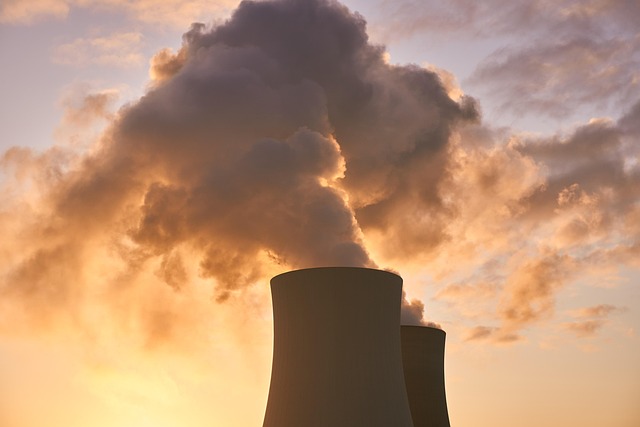
When you picture a nuclear reactor, you probably imagine the colossal, concrete cooling towers and sprawling complexes that have dotted the landscape for over half a century. These are predominantly Light-Water Reactors (LWRs), a reliable but decades-old technology. Advanced nuclear, on the other hand, represents a fundamental reimagining of how we can harness atomic power. It’s an umbrella term for a diverse group of next-generation reactors that operate at higher temperatures or lower pressures and often use different fuels and coolants than their predecessors.
Think of it as the difference between a classic 1970s sedan and a modern electric vehicle. Both will get you down the road, but the underlying technology, efficiency, and safety features are worlds apart. According to the U.S. Department of Energy, these new designs offer dramatic improvements in safety, efficiency, and waste reduction. Instead of relying solely on water, they might use coolants like molten salt, liquid metal (like sodium or lead), or high-temperature gas. This allows them to operate more efficiently and, crucially, incorporates inherent safety features that make accidents of the past virtually impossible.
- Diverse Coolants: While traditional reactors use water, advanced designs employ materials like molten salt or liquid sodium. These can operate at higher temperatures and lower pressures, boosting efficiency and safety margins.
- Higher Efficiency: By operating at much higher temperatures, advanced reactors can generate more electricity from the same amount of fuel. Some can even pair with industrial processes to provide high-heat steam, decarbonizing sectors beyond the power grid.
- Fuel Innovation: Many new designs are moving beyond traditional uranium fuel rods to more robust forms, like TRISO particle fuel, which is encapsulated in layers of carbon and ceramic, making it meltdown-proof.
- Waste Reduction: Certain types of advanced reactors, like fast-neutron reactors, have the potential to "burn" or transmute the long-lived radioactive waste from the current fleet, turning a multi-generational problem into a potential fuel source.
The Safety Revolution: Moving Past Chernobyl's Shadow
Let's address the elephant in the room: safety. For many, the word "nuclear" immediately conjures images of disaster. The specter of Chernobyl and the more recent memory of Fukushima have understandably created deep-seated public anxiety. However, the core design philosophy of advanced reactors is built around a concept called passive safety. This is a game-changer. It means the reactors are engineered to shut down and remain cool on their own during an emergency, without needing any external power, backup generators, or human intervention.
How does this work? It’s all about physics, not complex computer systems. For instance, in some molten salt reactor designs, if the plant loses power, a freeze plug made of frozen salt simply melts, and the liquid fuel drains into a secure containment tank where the reaction passively stops. No buttons to push, no valves to turn. As Dr. Ashley Finan, Director of the National Reactor Innovation Center, puts it, these systems are designed to "fail safe," using the laws of nature like gravity and natural circulation to prevent overheating. This fundamental shift away from active, human-dependent safety systems to passive, physics-based ones is the single most important innovation for rebuilding public trust and ensuring the secure operation of the next generation of nuclear power.
Small Modular Reactors (SMRs): Powering the Future, One Small Step at a Time
Perhaps the most talked-about trend within advanced nuclear is the rise of Small Modular Reactors, or SMRs. For decades, the nuclear industry was defined by a "go big or go home" philosophy, leading to massive, multi-billion-dollar gigawatt-scale projects that were often plagued by cost overruns and construction delays. SMRs flip that script entirely. As defined by the Nuclear Regulatory Commission (NRC), SMRs typically produce up to 300 megawatts of electricity—about a third of a traditional plant—and have a much smaller physical footprint.
The real magic of SMRs lies in the "M"—modular. These reactors are designed to be manufactured in a factory setting and then shipped to a site for assembly. This standardized, assembly-line approach promises to drastically cut down on construction time and costs, avoiding the bespoke, on-site construction challenges of the past. This model not only makes nuclear power more economically viable but also more flexible. Instead of one giant plant, a utility could install a few modules and then add more as energy demand grows, offering a scalability that was previously unimaginable.
- Factory Fabrication: Building components in a controlled factory environment enhances quality control and dramatically reduces lengthy and expensive on-site construction.
- Scalable Power: Utilities can start with a single module and expand capacity over time, matching power generation to local demand without a massive upfront capital investment.
- Flexible Siting: Their smaller size allows SMRs to be placed in more locations, such as replacing retiring coal plants (utilizing existing grid infrastructure) or powering remote industrial sites and communities.
- Enhanced Safety: SMRs often feature simplified, passively safe designs. Their smaller reactor cores contain less nuclear material, reducing the potential risk in the unlikely event of an incident.
- Diverse Applications: Beyond the grid, SMRs can provide carbon-free power for energy-intensive applications like hydrogen production, water desalination, and district heating.
Economic Winds are Shifting: Investment and Bipartisan Support
For years, the biggest barrier to new nuclear wasn't technology or safety—it was economics. Building a traditional nuclear plant was a monumental financial risk. But now, the economic landscape is undergoing a dramatic transformation. Landmark legislation like the Inflation Reduction Act (IRA) of 2022 has introduced production tax credits for new, carbon-free energy sources, making advanced nuclear projects significantly more attractive to investors. These incentives level the playing field, allowing nuclear to compete with other clean energy sources on cost.
This policy support has unlocked a wave of private investment. Tech billionaires like Bill Gates (through his company TerraPower) and OpenAI's Sam Altman are pouring hundreds of millions into advanced nuclear startups. This isn't just a niche interest; it reflects a broader consensus. Remarkably, in a hyper-partisan era, advanced nuclear has become one of the few issues with broad bipartisan support in Washington. Both sides of the aisle recognize its potential for creating high-paying jobs, ensuring grid stability, and strengthening American energy independence. This powerful combination of smart policy, private capital, and political unity is creating an unprecedented tailwind for the industry.
A Perfect Partner for Renewables: Solving the Intermittency Problem
A common misconception is that nuclear power is in competition with renewables like solar and wind. The reality is quite the opposite. As we add more intermittent resources to the grid, we face a major challenge: what do we do when the sun isn't shining or the wind isn't blowing? Battery storage is part of the solution, but today's technology can't yet provide days of backup power for an entire city. This is where advanced nuclear shines as the perfect partner for a renewable-heavy grid.
Unlike solar and wind, nuclear provides a constant, reliable source of "baseload" power, operating 24/7 regardless of the weather. Advanced reactors are also being designed to be more flexible, with the ability to ramp their power output up and down to complement the fluctuating output from renewables. This ensures the grid remains stable and resilient. As Jesse Jenkins, an energy systems engineering professor at Princeton University, has often noted in his research, a system that pairs renewables with a firm, clean power source like nuclear is often the most affordable and reliable path to full decarbonization. In this vision, renewables provide the bulk of the energy, while nuclear provides the essential, unwavering backbone.
Fueling Innovation: New Fuels and Waste Management Solutions
Another long-standing public concern about nuclear energy is the question of what to do with the spent fuel. For decades, the US has lacked a permanent solution for its nuclear waste. While this remains a challenge for the existing fleet, advanced reactors offer promising new pathways. Some designs, known as fast-neutron reactors, are capable of consuming what we currently consider "waste." They can use the spent fuel from traditional reactors as their own fuel, extracting far more energy from it and drastically reducing the volume and long-term radioactivity of the final waste product.
Alongside this, there is tremendous innovation in the fuel itself. A leading example is Tristructural Isotropic (TRISO) particle fuel. Each tiny particle of uranium is encased in multiple layers of pyrolytic carbon and silicon carbide, creating a microscopic, super-resilient containment vessel. This fuel is incredibly robust and can withstand extreme temperatures well beyond what a reactor would ever experience, making it effectively meltdown-proof. According to the Idaho National Laboratory, which has extensively tested TRISO fuel, its performance is "nothing short of remarkable." This combination of waste-reducing reactors and accident-tolerant fuels addresses two of the most persistent criticisms of nuclear power head-on.
Real-World Momentum: Projects Taking Shape in 2025
This conversation isn't just theoretical; the momentum is real and visible. Across the country, advanced nuclear projects are moving from blueprints to reality. One of the most prominent examples is TerraPower's Natrium reactor project in Kemmerer, Wyoming. Backed by Bill Gates and the U.S. Department of Energy, this project is set to be built at the site of a retiring coal plant, demonstrating a path forward for communities transitioning away from fossil fuels. The Natrium reactor is a sodium-cooled fast reactor paired with a molten salt energy storage system, allowing it to boost its output on demand to support renewables.
Meanwhile, the NRC has already given its final design certification to NuScale Power for its SMR design—the first and only SMR to receive such approval in the United States. This is a massive regulatory milestone that paves the way for deployment. Companies like X-energy are also making strides with their high-temperature gas-cooled reactors, designed to provide both electricity and high-temperature industrial heat. These tangible projects, backed by serious funding and regulatory progress, show that the advanced nuclear trend in 2025 is built on a foundation of real-world action.
Challenges on the Horizon: Hurdles to Widespread Adoption
Despite the incredible optimism, the path to a widespread rollout of advanced nuclear is not without its obstacles. It would be naive to ignore the significant hurdles that remain. First and foremost are the "first-of-a-kind" costs. While the long-term goal is for SMRs and other advanced designs to be cheaper through factory production, the initial demonstration projects are still incredibly expensive. Proving the economic model will be crucial for attracting the scale of investment needed for mass deployment.
Regulatory frameworks, while evolving, are still largely based on the large light-water reactors of the past. The NRC is working to modernize its processes for these novel designs, but licensing timelines can still be long and uncertain. Building out robust supply chains for new types of fuels and components will also take time and significant investment. Finally, and perhaps most importantly, is public perception. The industry must continue to engage in open, transparent dialogue with communities to explain the technological leaps in safety and overcome the deeply ingrained fears of a previous nuclear era. Successfully navigating these challenges will determine the pace and scale of the advanced nuclear revolution.
Conclusion
The year 2025 is shaping up to be a pivotal moment for the future of US energy. The conversation is no longer about if we should pursue new nuclear power, but how we can deploy it safely, quickly, and affordably. With its passive safety designs, economic viability spurred by new policies, and its crucial role as a reliable partner to renewables, advanced nuclear technology is moving from the fringes to the mainstream of climate solutions. The journey is far from over, and significant challenges in cost, regulation, and public trust still need to be addressed. Yet, the convergence of innovation, investment, and bipartisan political will has created a wave of momentum that feels different this time. It’s a pragmatic, technology-forward approach to a clean energy future that is simply too promising to ignore.
FAQs
How are advanced reactors safer than old ones?
Advanced reactors prioritize "passive safety," meaning they rely on natural physical forces like gravity and convection to cool down during a shutdown. They don't require external power or human intervention to prevent overheating, which makes events like Fukushima or Chernobyl virtually impossible with these new designs.
What is a Small Modular Reactor (SMR)?
An SMR is a nuclear reactor that is smaller than a traditional one, typically producing under 300 MWe. Its key feature is modularity—components can be factory-built and shipped to a site for easier and cheaper assembly. This makes them more scalable and flexible for various energy needs.
Doesn't nuclear power create a lot of waste?
While all nuclear power produces spent fuel, some advanced reactors, like fast reactors, are designed to run on what we currently consider "waste." They can consume used fuel from the existing fleet, dramatically reducing the volume and long-term radioactivity of the final waste product.
Is advanced nuclear technology expensive?
The first-of-a-kind demonstration plants are still expensive. However, the goal of SMRs and factory-based manufacturing is to bring costs down significantly over time. Additionally, new tax credits from policies like the Inflation Reduction Act are making the economics of new nuclear projects much more favorable.
Can nuclear power really help fight climate change?
Absolutely. Nuclear power is one of the largest sources of carbon-free electricity in the world. Advanced nuclear provides a firm, 24/7 clean power source that can complement intermittent renewables like solar and wind, creating a reliable and resilient grid that is essential for deep decarbonization.
When can we expect to see these new reactors online?
Several demonstration projects are aiming for operation by the late 2020s or early 2030s. TerraPower's Natrium project in Wyoming, for instance, is targeting a 2030 completion date. Widespread commercial deployment will likely follow throughout the 2030s.
Who is investing in this technology?
Investment is coming from both the public and private sectors. The U.S. Department of Energy is a major funder through programs like the Advanced Reactor Demonstration Program. Private investors include prominent tech figures like Bill Gates (TerraPower) and Sam Altman, as well as venture capital firms and established energy companies.