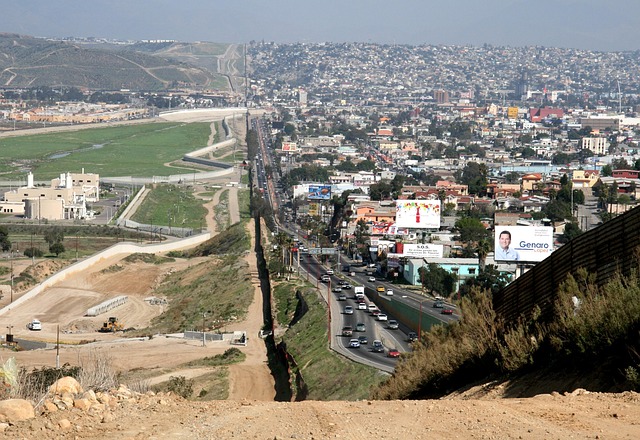
Border Wall Funding: How Republicans Plan to Finance the Revived Construction
Unpacking the complex financial strategies Republicans propose for border wall construction. Explore legislative efforts, budget battles, and potential funding sources.
Table of Contents
- Introduction
- The Political Landscape: Why the Wall is Back in Focus
- The Price Tag: Deconstructing the Cost of a Modern Border Wall
- Congressional Appropriations: The Traditional (and Contentious) Funding Route
- Repurposing Existing Funds: A Controversial Encore?
- The "Mexico Will Pay" Echo: Exploring Indirect Payment Mechanisms
- Leveraging State and Private Donations: A Grassroots Approach
- The Legislative Hurdles: Navigating a Divided Government
- Economic and Humanitarian Implications of Wall Construction
- Conclusion
- FAQs
Introduction
The border wall. Just the phrase itself can ignite a firestorm of debate, conjuring images of political rallies, legislative showdowns, and miles of steel bollards stretching across the desert. For years, it has been a potent symbol in American politics, representing vastly different ideas about national security, immigration, and sovereignty. After a period of relative quiet on the construction front, the conversation is roaring back to life. But this time, the central question has shifted from the philosophical to the fiscal. The renewed focus is on a monumental challenge: border wall funding.
With border security once again a top-tier issue for Republican lawmakers, proposals to restart and expand the wall are gaining significant traction. But how, exactly, do they plan to pay for it? The famous "Mexico will pay for it" promise of the past has evolved into a more complex, multi-pronged financial strategy. It's a puzzle involving congressional budgets, executive authority, and creative, if controversial, economic levers. This article pulls back the curtain on the financial blueprints being drafted, exploring the various avenues Republicans are considering to turn campaign rhetoric into concrete and steel reality. From traditional budget appropriations to reprising legally contentious tactics, we'll dive into the mechanics, feasibility, and political friction behind financing a 21st-century border wall.
The Political Landscape: Why the Wall is Back in Focus
To understand the renewed push for wall funding, you have to look at the current political climate. Immigration and border security have surged to the top of voter concerns, driven by record numbers of migrant encounters at the U.S.-Mexico border. For the Republican party, this isn't just a policy issue; it's a powerful rallying cry. The wall serves as a tangible, easy-to-understand solution that resonates deeply with their base, symbolizing a commitment to "law and order" and controlled immigration.
This focus is strategically amplified during election cycles. By highlighting the border situation, GOP candidates aim to draw a sharp contrast with the policies of the Biden administration, which halted wall construction upon taking office. They frame the debate as a matter of national security, accusing their political opponents of fostering an "open border" policy. Whether you agree with that characterization or not, its political potency is undeniable. This environment creates immense pressure on Republican lawmakers to not just talk about the wall but to present a credible plan for its construction and, most importantly, its funding.
The Price Tag: Deconstructing the Cost of a Modern Border Wall
So, what are we actually talking about in terms of cost? It's a notoriously slippery number. During the Trump administration, estimates fluctuated wildly, but a 2021 report from the Government Accountability Office (GAO) provided some clarity, noting that the administration had allocated approximately $15 billion to construct about 738 miles of barrier. That's a staggering figure, averaging over $20 million per mile. And that's just the initial construction.
The true cost goes far beyond pouring concrete and erecting steel panels. It's a complex ledger that includes a host of often-overlooked expenses. Acquiring the necessary land from private citizens and states through purchase or eminent domain can lead to years of expensive legal battles. Then there's the integration of advanced technology—sensors, cameras, and drones—which is critical for a "wall system" to be effective. Finally, there's the long tail of maintenance. A wall in the harsh desert environment needs constant upkeep, repairs, and staffing. Experts suggest that maintenance costs can run into the billions over the structure's lifetime, a recurring expense that future budgets would have to absorb. Any serious funding plan has to account for this entire lifecycle, not just the upfront price tag.
Congressional Appropriations: The Traditional (and Contentious) Funding Route
The most straightforward and constitutionally sound method for funding any federal project is through direct congressional appropriation. This means Congress allocates money specifically for the border wall in its annual budget for the Department of Homeland Security (DHS) and its subsidiary, Customs and Border Protection (CBP). In theory, this is how the system is designed to work: elected officials debate the merits of a project and decide whether to fund it with taxpayer dollars.
In practice, however, this path is a political minefield. Given the deep partisan divide on the issue, securing the 60 votes typically needed to pass a major spending bill in the Senate is a herculean task. The wall has become so polarizing that it often becomes a "poison pill" in negotiations, threatening to derail the entire federal budget and even trigger government shutdowns. Republicans would likely need to control both chambers of Congress and the White House to have a realistic shot at pushing significant funding through this traditional channel.
- The Power of the Purse: Article I of the Constitution gives Congress exclusive power over federal spending, making this the most legitimate, yet politically arduous, path.
- Annual Budget Battles: Funding is often tied to massive omnibus spending bills, forcing high-stakes negotiations where the wall can be used as a bargaining chip for other priorities.
- Targeted Allocations: A Republican-led effort would likely involve inserting specific line items for "border barrier systems" or "physical infrastructure" into DHS appropriation bills, a move guaranteed to face fierce opposition.
Repurposing Existing Funds: A Controversial Encore?
What happens when Congress won't cooperate? The previous administration offered a playbook that future Republican leaders might be tempted to follow: repurposing funds from other government agencies. In 2019, a national emergency was declared at the southern border, an act that allowed the administration to divert billions of dollars from the Department of Defense (DoD) budget, originally intended for military construction projects, toward building the wall.
This strategy was, and remains, intensely controversial. Critics, including both Democrats and some fiscally conservative Republicans, argued it was a blatant end-run around Congress's constitutional power of the purse. The move sparked numerous legal challenges and set a precedent that many find alarming. According to the non-partisan Congressional Research Service (CRS), while the executive branch has some authority to reallocate funds under specific statutes, using emergency powers for a non-military project that Congress explicitly refused to fund pushes the boundaries of presidential authority. A revival of this tactic would undoubtedly lead to a new wave of court battles and a constitutional showdown over the separation of powers.
The "Mexico Will Pay" Echo: Exploring Indirect Payment Mechanisms
The iconic promise that Mexico would directly finance the wall has largely faded, but the underlying idea has been repackaged into more subtle, indirect mechanisms. The goal is the same: to generate revenue from sources related to Mexico or cross-border activity that can then be earmarked for wall construction. This approach allows proponents to claim, in a roundabout way, that Mexico is bearing the cost.
Several specific proposals have been floated. One popular idea is to implement a new tax or fee on remittances—the money that immigrants in the U.S. send home to family in Mexico. Another involves increasing fees for visas or border crossing cards. A more aggressive option would be to impose targeted tariffs on Mexican imports, with the resulting revenue directed to a wall fund. However, economists from across the political spectrum, including those at libertarian think tanks like the Cato Institute, warn of serious negative consequences. Such measures could hurt the U.S. economy, raise prices for American consumers, and invite retaliatory tariffs from Mexico, potentially sparking a damaging trade war.
Leveraging State and Private Donations: A Grassroots Approach
Frustrated by federal inaction, some proponents have turned to more localized and private funding streams. This strategy operates on two main fronts: state-led initiatives and private crowdfunding. States like Texas, under Governor Greg Abbott's "Operation Lone Star," have allocated billions in state funds to construct their own barriers on state-owned and private land. This allows them to bypass Washington's gridlock, though it results in a piecemeal approach rather than a continuous federal barrier.
On the private side, crowdfunding efforts have captured headlines. The most famous example, the "We Build the Wall" campaign, raised over $25 million from private citizens. While it demonstrated a passionate base of support, the effort was ultimately plagued by legal troubles and fraud indictments, serving as a cautionary tale. Ultimately, these methods face serious limitations.
- Limited Scope: State and private funds combined are a mere fraction of the total cost required for a comprehensive border wall system.
- Legal Hurdles: Building on private or state land doesn't solve the problem of construction on vast stretches of federally owned territory, which requires federal approval.
- Coordination Challenges: A patchwork of state and private walls can create logistical nightmares for federal agencies like Border Patrol, who are tasked with monitoring the entire border.
The Legislative Hurdles: Navigating a Divided Government
At the end of the day, any large-scale, sustainable plan for border wall funding must contend with the reality of a divided American government. No matter how clever the funding proposal, it will eventually collide with the hard wall of legislative mathematics. To pass a major funding bill, proponents need a majority in the House of Representatives and, crucially, a supermajority of 60 votes in the Senate to overcome a likely filibuster.
This political reality forces Republicans to choose between two paths. The first is compromise: scaling back their plans and adding other border security measures, like more technology or personnel, to attract some Democratic support. The second is confrontation: using budget deadlines and the threat of government shutdowns as leverage to force the opposition's hand. Both strategies are fraught with risk and have no guarantee of success. The fate of border wall funding is therefore inseparable from the broader political power dynamics in Washington, D.C.
Economic and Humanitarian Implications of Wall Construction
Beyond the spreadsheets and budget proposals, it's crucial to acknowledge that border wall funding has profound real-world consequences. Economically, the impact is felt most acutely in border communities. While construction can bring temporary jobs, a hardened border can also disrupt the cross-border trade and tourism that are the lifeblood of many towns. Environmental groups also point to the significant ecological damage caused by construction, which can fragment wildlife habitats and cause flooding.
From a humanitarian standpoint, organizations like the American Civil Liberties Union (ACLU) and Human Rights Watch argue that physical barriers do not deter desperate people but instead push them to take more dangerous and remote routes, leading to a higher number of deaths in the unforgiving desert terrain. They also contend that walls impede the legal right of individuals to seek asylum. These vital considerations are often part of the debate that shapes public opinion and political will, indirectly influencing whether lawmakers are willing to allocate the massive funds required for construction.
Conclusion
The path to financing a renewed and expanded border wall is anything but a straight line. Republican proposals paint a picture of a complex and multifaceted strategy, weaving together traditional appropriations, controversial executive actions, indirect economic pressure, and grassroots fundraising. Each avenue is fraught with its own unique set of political, legal, and economic challenges. Relying on congressional appropriations demands a level of political unity that is rare in modern Washington. Repurposing military funds invites a constitutional clash. And levying fees or tariffs risks economic blowback.
Ultimately, the conversation around border wall funding is about more than just money. It is a reflection of the nation's deep divisions on immigration, security, and the very role of government. As the debate continues to unfold, it's clear that securing the necessary billions will require navigating a treacherous landscape of legislative gridlock and fierce ideological opposition. The question of how to pay for the wall is, and will likely remain, as contentious and formidable as the structure itself.
FAQs
How much did the border wall cost under the Trump administration?
According to the Government Accountability Office (GAO), the Trump administration allocated approximately $15 billion for border wall construction. This funding came from a combination of direct congressional appropriations for DHS, repurposed DoD funds, and Treasury Forfeiture Fund dollars. This covered the construction of around 458 miles of new barrier, much of which replaced older, less effective fencing.
What is the most likely way Republicans would fund a new wall?
The most likely approach would be a combination of methods. The primary goal would be to secure funding through the traditional congressional appropriations process for the Department of Homeland Security. However, if faced with a divided government or Democratic opposition, they would likely attempt to repurpose funds from other departments, particularly the Department of Defense, citing national security concerns, similar to the strategy used previously.
Can a president fund the wall without Congressional approval?
This is a legally contentious issue. The Constitution grants Congress the "power of the purse." However, a president can declare a national emergency, which may unlock certain statutes allowing the redirection of funds, particularly from the military construction budget. This action is highly controversial and is guaranteed to face immediate and significant legal challenges arguing it oversteps executive authority.
Did Mexico ever pay for the wall?
No, the government of Mexico did not directly pay for any portion of the border wall. The funding used came from U.S. taxpayer dollars appropriated by Congress or repurposed from other U.S. government departments. Current Republican proposals focus on indirect methods, such as fees on remittances or tariffs, to argue that the financial burden is being shifted, but this is not a direct payment from the Mexican government.
What are the main arguments against funding a border wall?
Opponents argue that a wall is prohibitively expensive, environmentally destructive, and largely ineffective, as it can be bypassed with tunnels, boats, or ladders. They also raise humanitarian concerns, stating that it forces migrants into more perilous crossing routes and infringes on the rights of asylum seekers. Many also argue the money would be better spent on more modern security solutions like advanced surveillance technology, increased personnel, and addressing the root causes of migration.
How much of the U.S.-Mexico border already has a barrier?
The U.S.-Mexico border is approximately 2,000 miles long. As of early 2024, there are about 700-800 miles of various types of barriers in place. A significant portion of this consists of older, less formidable vehicle barriers and fencing that was replaced or supplemented with taller, 18-to-30-foot steel bollard walls during the Trump administration.
What is the difference between a "wall" and a "fence"?
Politically, the terms are often used for rhetorical effect. In practice, most of the "wall" constructed is technically a steel bollard fence. It consists of tall, closely-spaced steel posts filled with concrete and rebar. This design is intended to be difficult to climb or cut through while still allowing Border Patrol agents to see through to the other side, which is a key operational advantage over a solid concrete wall.